Dressing Petite: Division Points, Waist Placement and What Shoes Actually Do
Hem lengths by height, an exact waistline position and shoe choices that extend the leg, all measurable and all repeatable.
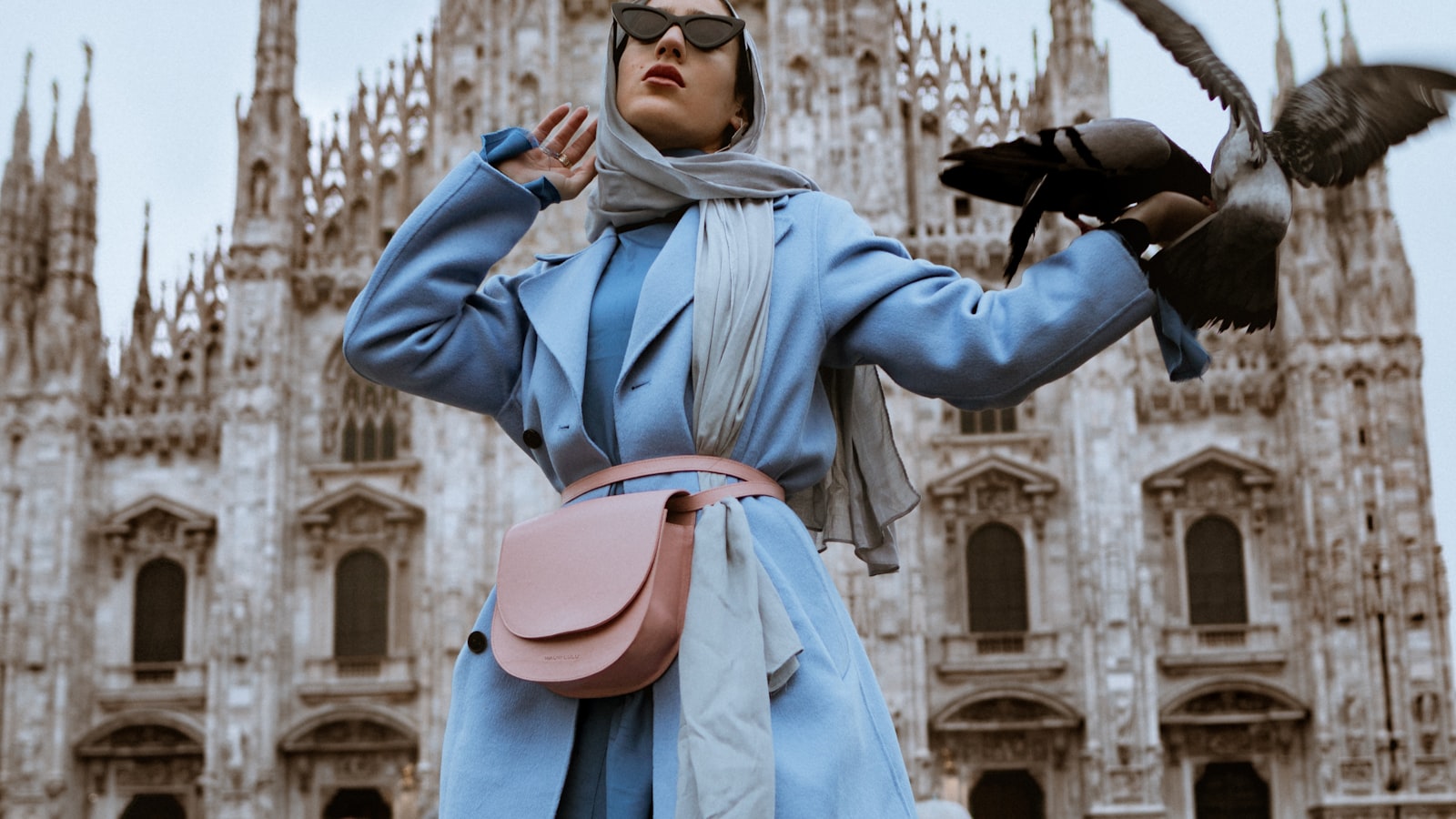
Most anxiety about dressing petite comes from equating looking taller with wearing heels. What actually governs the read is not absolute height but where the body is divided and how continuous the lines are. Someone at 150 cm, roughly 4 ft 11, can read at 160 cm or better with the division point placed correctly, whereas a heel usually buys two or three centimetres at the cost of comfort, and leaves you unable to walk by late afternoon.
This piece supplies comparative data: hem lengths in centimetres for each height band, the precise position of a raised waistline, and how to choose footwear that reads as an extension of the leg. All of it is measurable and repeatable, and none of it depends on luck or on forcing your feet into something punitive. Proportion is arithmetic rather than mysticism, and a soft tape plus a little patience is enough to redefine what your height is doing for you.
Proportion Outranks Height
The classical division of the human figure falls at roughly sixty-two per cent of total height. The petite task is to move that point upward artificially with the waistline, so the lower body occupies more of the visual field. Put differently, making the leg longer to the eye is a far better investment than gaining actual height, because it changes the read without changing the skeleton and demands nothing uncomfortable of you.
The mechanism is a raised waist plus continuous vertical lines. Move the waistline from the natural hip up to just below the ribs and the leg's starting point rises by 5 to 8 cm, roughly 2 to 3 in, which lengthens the whole figure instantly. What you are editing is the proportion, not the frame. That principle moves you out of I am too short and into where should I divide my body, which converts an anxiety into a geometry problem with a solution.
Self-check: stand against a wall and photograph yourself full length, then mark the waist and the ankle. If waist-to-floor is under sixty per cent of your total height, the waistline still needs raising and should not be left sitting at the natural hip.
- The classical division sits at about sixty-two per cent of height
- Raising the waistline 5 to 8 cm is enough to lengthen the read
- The target is proportion, not absolute height
The Division Point: High Rise and Cropped Lengths
The high waistline belongs 2 to 3 cm above the navel, at the narrowest point below the ribs, and that is where the visual leg begins. Bottoms must be high-rise, with a waistband 3 to 4 cm wide, since anything wider starts to read as midsection rather than structure. Keep tops above the hip bone or tucked in, because a hem that covers the waistband gives back every centimetre you just gained and the effort cancels itself out.
For trousers, take a cropped length that exposes the narrowest part of the ankle, which reads sharper than full length. A cropped hem should clear the floor by 2 to 3 cm, which is both cooler and leg-lengthening. If you do wear full length, pair it with a heel so the hem covers the top of the shoe and trouser and leg read as one continuous column. Get the division point right and the leg begins at the waist, which is the single most useful sentence available to a petite wearer.
The numbers: a 3 to 4 cm waistband gives the longest read, since wider thickens the midsection and narrower offers no support. Set the top hem 2 cm above the hip so it covers the waistband without swallowing the leg.
Skirt Length Against Height
Skirt length is where petite dressing most often goes wrong. Working from height: at around 150 cm, keep the skirt between 43 and 45 cm, which is about 10 cm above the knee. At 155 cm, roughly 48 cm. At 160 cm, 51 to 53 cm. At 165 cm and above, 55 to 58 cm is available. The principle is that the hem lands just above the narrowest part of the calf rather than at the knee, which cuts the leg into two awkward segments.
Avoid the knee-cut, meaning a hem that sits exactly over the kneecap, because it severs the leg line horizontally and costs about 5 cm of apparent height on the spot. Go clearly above the knee, or past it to below the calf muscle. The middle band is the one that shortens. This table is far more reliable than following whatever length is selling, and it is worth screenshotting to compare against before you buy rather than deciding on a feeling in the shop.
A usable formula: the hem should land just above the narrowest point of the calf, which corresponds to roughly your height minus 105 cm. At 160 cm that gives about 55 cm, and a knee-cut hem subtracts a further 5 cm from the visual read.
- 150 cm gives a 43 to 45 cm skirt
- 155 cm gives 48 cm; 160 cm gives 51 to 53 cm
- 165 cm gives 55 to 58 cm, and avoid the knee-cut at every height
What Footwear Actually Extends
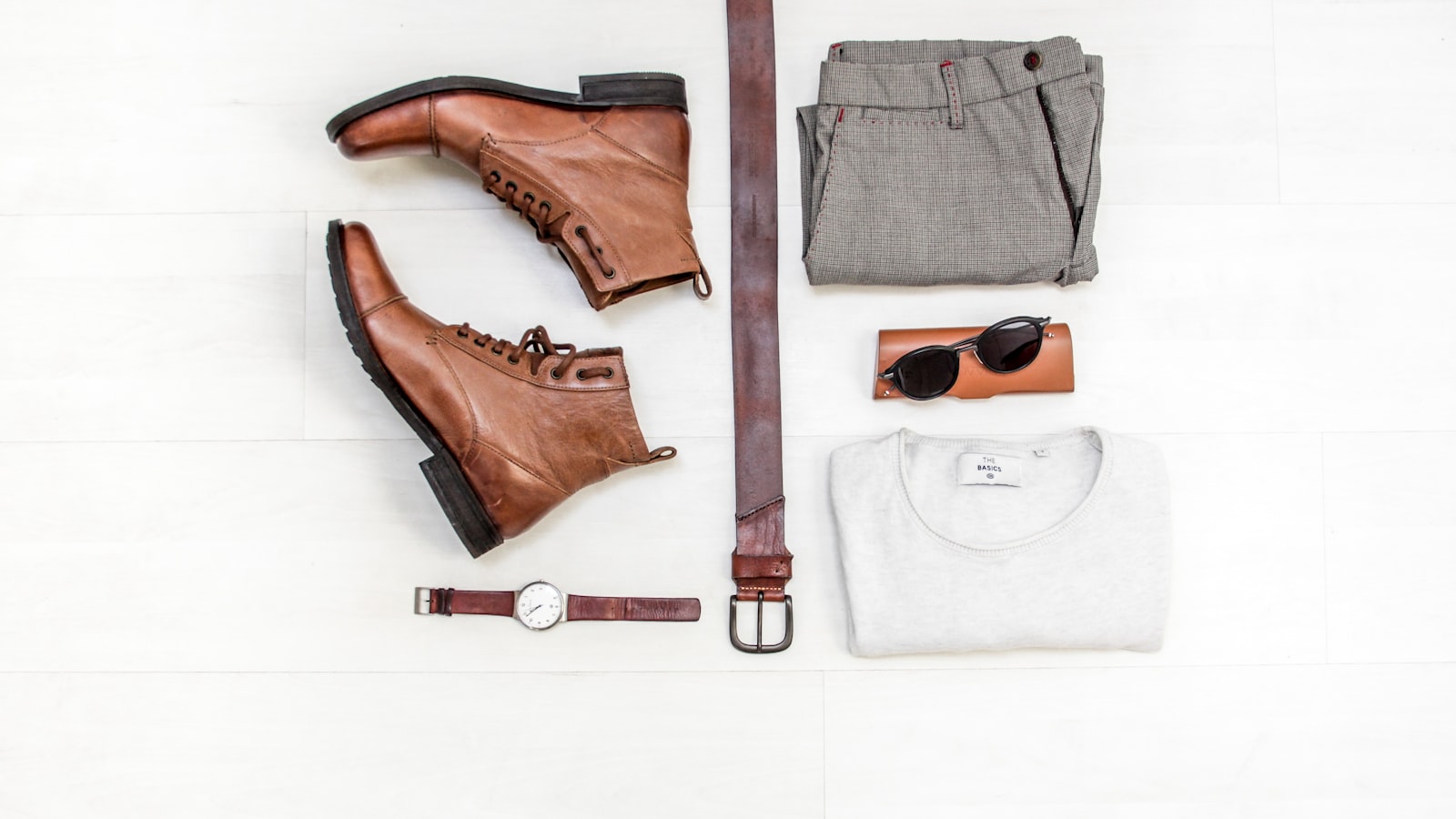
The shoe is an extension of the leg, and the choice decides the length. A pointed toe reads longer than a round one because the point carries the line forward. A low-cut shoe that exposes the top of the foot reads slimmer than an enclosing style, because the instep is counted as continuation rather than interruption, so the foot stops being a full stop at the end of the leg. Matching shoe colour to the bottom half erases the break at the ankle entirely, and the leg runs straight into the toe.
There is no need to fight for height in the heel: 3 to 5 cm on a block or wedge is sufficient, walks better than a stiletto and survives a full commuting day. In boots, a shaft ending 2 cm below the narrowest part of the calf is ideal, and avoid anything that bunches at the calf muscle, which pinches off the leg exactly where it is narrowest. Matching socks to shoes is another quiet petite technique, since the ankle stops being a horizontal line and the leg carries to the floor in one movement.
The footwear ledger: matching shoe to bottom half extends the leg read by roughly 5 to 8 cm, and a pointed toe adds about 3 cm over a round one. Both are more controllable, and considerably more comfortable, than switching to a higher heel.
Top Length: Never at the Hip
If a top's hem lands exactly at the widest point of the hip, it cuts the body horizontally and reads both shorter and wider. The safe lengths are waist, meaning tucked in, or the upper edge of the seat, just covering the waistband. A short jacket ending between the waist and 10 cm above the hip flatters proportion most, covering the waistband without emptying out the lower half, so the leg line begins early and the upper body does not consume the figure.
Long coats are double-edged on a petite frame: either short to just above the seat, or long past the knee to mid-calf, avoiding the mid-length that stops at the calf muscle. A long coat with a vertical opening creates a line from shoulder to hem, which is far safer than a horizontal interruption. Top length comes down to refusing to cut the body across at the wrong place, since every cut should lengthen rather than sever, and no price tag can rescue a proportion that has already been divided badly.
The red line: no hem past the midpoint of the seat, and long coats in only two lengths, 10 cm above the seat or 20 cm below the knee. The mid-length coat is the primary offender against petite proportion.
Pattern and Visual Illusion
Vertical stripes and small dense prints read taller than large checks, because vertical texture moves the eye up and down rather than sweeping it side to side. Placement matters too: a small print above with a plain colour below lifts the centre of gravity and reads taller, whereas a large print across the whole body inflates volume and flattens the sightline, which has the effect of pixelating the figure rather than describing it.
At the waist, a slim belt matched to the bottom half reinforces the division point, but a wide belt in a contrasting colour will saw the body into two pieces. Visual illusion is fundamentally about steering the eye vertically and continuously, so any element that cuts across horizontally deserves scrutiny. Petite dressing is, in the end, a gentle piece of direction: you are not changing the body, only deciding where the eye lands first.
A quick illusion test: photograph the full outfit and see where your eye goes first. If it lands at the ankle rather than the waist, a print or a seam is cutting you horizontally, and the fix is to return to vertical lines.
Fabrics and Prints to Avoid
Avoid materials with inherent bulk: heavy corduroy, chunky hand-knits and stiff canvas all add a layer of width. Petite frames are better served by fine worsted wool, lyocell and heavyweight silk, which sit close without swelling. Bottoms need drape in particular, so skip tulle and rigid denim, both of which enlarge the hip and undo the division point you carefully placed above the navel.
Keep print scale small and dense: florals under 1 cm across, fine checks, and no oversized windowpane or exaggerated animal print, both of which consume the figure at close range. Fine vertical stripes are welcome; wide horizontals are not. In one sentence, the smaller the frame the lighter and finer the elements should be, so the eye follows the body rather than cutting across it.
Practical checklist
- Set the waistline 2 to 3 cm above the navel at the narrowest point below the ribs, and let the leg start there
- Choose skirt length by height, and go clearly above the knee or well past it rather than at it
- Wear cropped trousers to show the ankle, and pair full length with a heel so the hem covers the shoe
- Choose pointed low-cut shoes matched to the bottom half so the instep counts as leg
- Keep tops above the hip, and buy long coats either short or past the knee, never mid-calf
The truth about dressing petite is that you do not need to be taller, only correctly divided. Move the waistline up a few centimetres, choose hem length from the table rather than the trend, and match shoe to bottom half so the line runs to the floor. Those three outperform any lift ever built into a shoe. Judge a petite outfit by how high the leg appears to begin and how unbroken the line is, because with the proportion right, 150 cm carries 160 cm of presence and nobody can identify the method.
Frequently asked
Is there any hope below 150 cm?
Can petite frames wear long skirts?
Keep reading
More Styling
Dressing for Interviews: Industry Calibration and the First Seven Seconds
Calibrate formality to the industry, work the variables that genuinely shape a first impression, and run a checklist before you leave.

Minimalism Without Blandness: The Three Compensations
Cut supplies shape, material supplies substance, detail supplies sincerity, and together they fill the space that subtraction leaves behind.
The Three-Layer Method: Thickness Gradients, Temperature Control and Proportion
Assign each layer one job, keep the bulk in a single layer, and use measured hem reveals so layering adds interest instead of width.