The Language of Denim Fit: Ounce Weight, Selvedge, and Matching the Cut to Your Legs
Straight, wide, tapered, and skinny each have their wearer; ounce weight and selvedge define a denim's character, with a body-match formula.
The most abused sentence about jeans is that they "go with everything." In reality, a 14 oz straight and a 9 oz skinny on the same person are two different bodies. Most people keep three or four jeans that do not actually suit them, because they never matched the cut language to their leg shape, and never read the "ounce" on the cloth or the "selvedge" in the waistband.
This piece breaks denim into four blocks - cut, ounce weight, selvedge, and wash - and gives a selection formula for each body type. After reading, you should be able to judge, from a jean's weight and leg opening alone, whether it was made for your legs.
Four base cuts for four leg types
The straight leg holds the same width from thigh to ankle, about 18-20 cm, and flatters almost no one badly - especially those with straight, evenly proportioned legs; it is the safe card. The skinny opening runs 14-16 cm, hugging the leg; it suits thin legs and pear-shaped upper bodies, but exposes a thick calf. The taper is loose at the thigh and narrows to the ankle at 16-17 cm, correcting a thick thigh with a slim lower leg - the most popular cut in recent years.
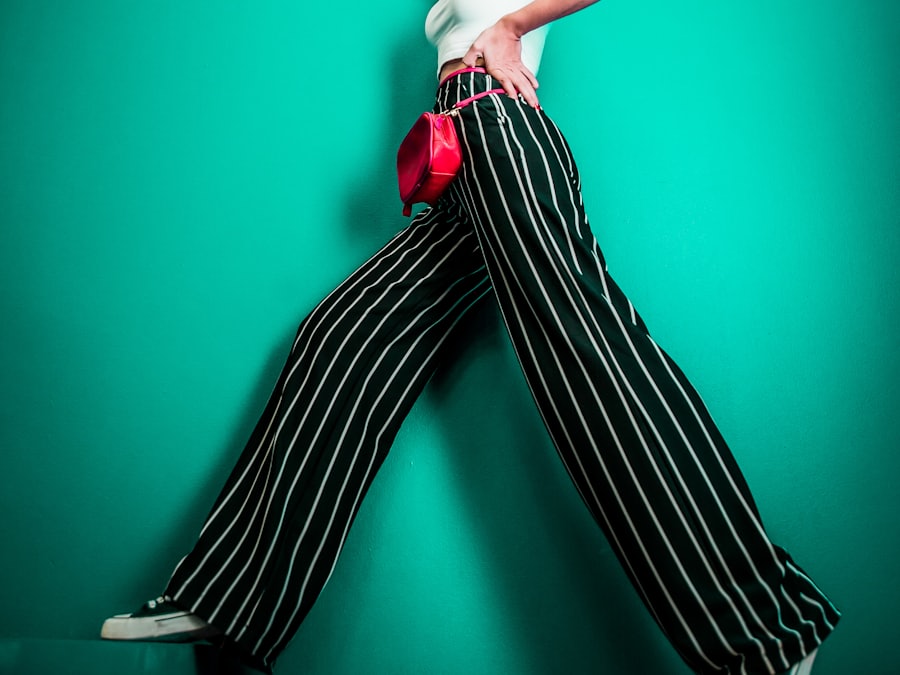
The wide leg opens past 22 cm and needs height above 170 cm or a high waistline to carry; otherwise it shortens. Its job is to balance broad shoulders or build a relaxed mood; shorter men should take a high-rise wide (waist 3 cm above the navel) with a chunky sole to pull the proportions.
- Straight: the safe card for straight, even legs
- Taper: the king of correction for thick thigh, slim calf
- Wide: needs 170 cm+ or a high waist to carry it
Ounce weight defines the denim's character
Denim weight is given in ounces (oz) per square yard. Light 8-10 oz (about 270-340 g/m) is soft and breathable, good for summer and skinny fits, but lacks stiffness and clings to the leg. Mid 11-13 oz is the universal zone - structured yet not rigid, used for most straights and tapers. Heavy 14-16 oz (the mainstay of raw denim) is stiff and shaped, the favorite of faders, but feels like cardboard for the first wears and needs breaking in.
Weight also drives the wash. Light denim takes complex washes easily (whiskers, sanding); heavy raw denim (unwashed) fades only through long wear, building a personal map. Beginners are safest starting with a 12 oz raw straight; after half a year you will see your own wear pattern.
Beyond leg shape, look at the seat. A flat butt should pick rear pockets set close together with the arc placed high, visually lifting; a round butt wants pockets slightly wider with a horizontal arc, avoiding a squeezed print. The rear pocket should sit at the mid-buttock; too high flattens, too low droops. This matters more for "butt feel" than the leg opening width.
Selvedge is the signature of an old loom
Selvedge (self-edge) is the colored chain stripe formed naturally at the fabric edge by old shuttle looms, usually visible at the turned-up cuff - red, white, or green. Modern projectile looms are fast but cannot produce selvedge, so the stripe became a marker of "slow work," found on cloth from old mills like Japan's Okayama or America's Cone Mills.
Note that selvedge does not equal quality; it only signals a narrow old loom. A 14 oz raw with selvedge might sell for 800-1500 yuan ($110-$210), while a quality 12 oz washed jean without selvedge can wear just as well. To judge worth, check whether the selvedge is fully enclosed inside the cuff and the cloth is even without flaws - not merely that "a colored line exists."
The ounce-to-weight conversion is checkable: 1 oz per square yard is about 33.9 g/m, so 13 oz denim is roughly 440 g/m (mid-weight, structured); 10 oz is about 340 g/m (light, summer); 15 oz is about 510 g/m (stiff, fading territory). Read the ounce on the tag and reverse-engineer the stiffness - more reliable than the word "thick."
Selvedge is the signature of craft, not a guarantee of quality.
Rise and the crotch-depth choice
The waistband splits into mid-rise (2 cm below the navel) and low-rise (on the hips). Asian men have a small waist-hip difference, so mid-rise fits better; a large difference (apple shape) should choose a high-rise to avoid chafing. Rise (crotch depth) sets crotch tension: standard 28-30 cm, skinny can drop to 26 cm for leg length but chafes when seated; relaxed styles run 32 cm and up for freedom.
When trying on, do a deep squat: the waist should not drop and the crotch should not bind. Many buy the right waist but a too-shallow rise; size up or choose a taper over a skinny. Remember: buy denim slightly tight, because cotton loosens 3-5% with wear and washing - but once the waist relaxes, the seat relaxes too, so the first try should be "buttoned and able to breathe."
Selvedge width has its own etiquette: classic selvedge is about 1 cm wide, red or green marking an old mill. Excessively wide colored edges are usually decorative after-stitching, not old-loom output. Check whether the selvedge finishes naturally with the cloth edge, flush with the inside cuff, rather than floating on the surface - the last glance that tells real from fake.
Wash and the raw-denim trade-off
Pre-washed denim is softened at the factory, does not bleed, and needs no fading care - for the hassle-averse, priced 200-600 yuan ($28-$83) mainstream. Raw denim is stiff and needs six months to a year of natural fade, building whiskers and honeycombs, priced 600-1500 yuan ($83-$210). The raw rule: no wash or only spot-clean for the first six months, letting oils and creases set; then cold hand wash, inside out, to preserve color.
To judge whether a jean is worth it, look at the stitching (double orange thread, even spacing), hardware (copper buttons and rivets with weight), and the rear-pocket arc (the brand's identity line) for symmetry. These details reflect workmanship more directly than ounce weight; a 30-yuan fast-fashion pair will cut corners exactly there.
Waistband height also links to underwear lines: low-rise denim catches the hips and, when seated, presses a visible underwear edge; mid-rise avoids this. Apple shapes take a high-rise to tuck the waist and abdomen; pear shapes take a mid-rise that does not chafe. Sit down in the try-on and check for red marks or underwear edges - if so, size up or choose a taper over a low-rise skinny.
Matching the cut to the occasion
For commuting, a 12 oz mid-blue straight or taper with a shirt and leather shoes stays appropriate. Weekends, a 10 oz light-blue skinny or taper with a hoodie and sneakers. Motorcycle or workwear looks call for a 14 oz raw straight - stiff and shaped. Formal settings do not suit jeans at all, but if forced, take a dark, hole-free taper with dress shoes and a blazer for smart-casual.
One last taboo: holes and heavy sanding belong only to casual wear; any pair labeled "distressed" worn to the office subtracts. Investing in two good base jeans (one mid-blue straight, one raw taper) beats hoarding five flashy ones.
Wash intensity splits into light, medium, and heavy: light wash keeps the raw feel with only slight fade; medium shows clear whiskers and sanding; heavy bleaching looks worn and thins the cloth. For longevity choose light wash or raw; heavy wash shows fatigue within a year or two. The heavier the wash, the older it looks, and the faster it tires.
Cuffing and the original inseam
Raw denim often keeps its original unhemmed length, leaving the cuff to the wearer. A cuff width of 4-5 cm is classic; too wide looks clumsy, too narrow flips open. The cuff also protects the selvedge from wearing through - part of the fading aesthetic.
Before hemming, measure with the shoes you actually wear, because heel height changes where the cloth lands. Cropped styles skip the cuff and show the ankle; full lengths take one cuff for sharpness. Note that after cuffing the hem is thicker and needs a locked stitch, or it frays after washing. Only buy if the selvedge is fully enclosed in the cuff.
Denim brands fall into three tiers: fast fashion (Uniqlo, Zara) at the 100-yuan level, with decent washes but uneven raw; Japanese denim (Okayama lines) at 800-2000 yuan ($110-$280), the selvedge raw benchmark; American denim (Levi's reproductions, Tellason) at 600-1500 yuan ($83-$210), honest about ounce weight.
Budget advice: first spend 300-600 yuan ($42-$83) on two good washed bases (straight plus taper) to wear daily, then save 1000 yuan ($140) and up for one Japanese raw to fade. Do not spread the budget across five cheap pairs; two good jeans out-wear and out-last five fast-fashion ones.
Practical checklist
- Straight legs choose straight; thick thighs choose taper; only thin legs touch skinny.
- Beginners are safest starting with a 12 oz raw straight.
- Read the selvedge inside the cuff to judge old-loom cloth.
- Do a deep squat when trying on; waist not dropping and crotch not binding means a fit.
- For commuting avoid holes and heavy sanding; a dark taper is safest.
The "goes with everything" claim about jeans is false; every ounce and every centimeter of leg opening rewrites your legs. The selection formula is short: first read leg shape to set the cut (straight, taper, wide, skinny); then the season to set the ounce (8-16 oz); finally your patience to set the wash (washed for convenience, raw for personality). Treat selvedge as a hobby, not a standard, and treat rise as a fitting action, not a parameter. Two good base jeans worn for three years beat ten trendy pairs worn for one season. One budget note: denim money belongs concentrated on one good raw, not scattered across a pile of flashy washes. A pair you fade yourself carries more story than ten trend pieces. And on the seat: rear-pocket position decides "butt feel" more than leg opening - the arc at mid-buttock is the stable choice. Beyond cut, ounce, and selvedge, the rear pocket is the last detail worth checking. And finally: ounce converts to g/m to reverse-engineer stiffness, and waistband height links to underwear lines. Square those two accounts and jeans will not sit idle in the closet.
Frequently asked
How do I wash raw denim the first time without shrinking or fading?
Is selvedge denim always more expensive and better?
Why do skinny jeans make my legs look short?
Do selvedge cuffs need to be turned up to look good?
Keep reading
More Apparel
Leather Jackets: Vegetable-Tan, Oil-Wax, and Reading the Grade
Distinguish vegetable-tanned, oil-wax, nappa, and PU by their tempers and grades; build a buying map from material to care.
Functional Activewear Fabrics: Wicking, Compression, and Matching Intensity
From wicking and compression to temperature control and seamless knitting, align fabric function to training intensity.
The Physics of Down Warmth: Fill Power, Fill Weight, and the Conversion That Matters
Use three rulers - fill power, fill weight, and down cluster content - to calculate whether a down jacket is warm enough for a given temperature.