Stacking Bracelets and Bangles: Width Ratio, Material Mix and Wear Noise
From graduated width and material compatibility to wear-noise control, the layering rules and comfort edge of the wrist.
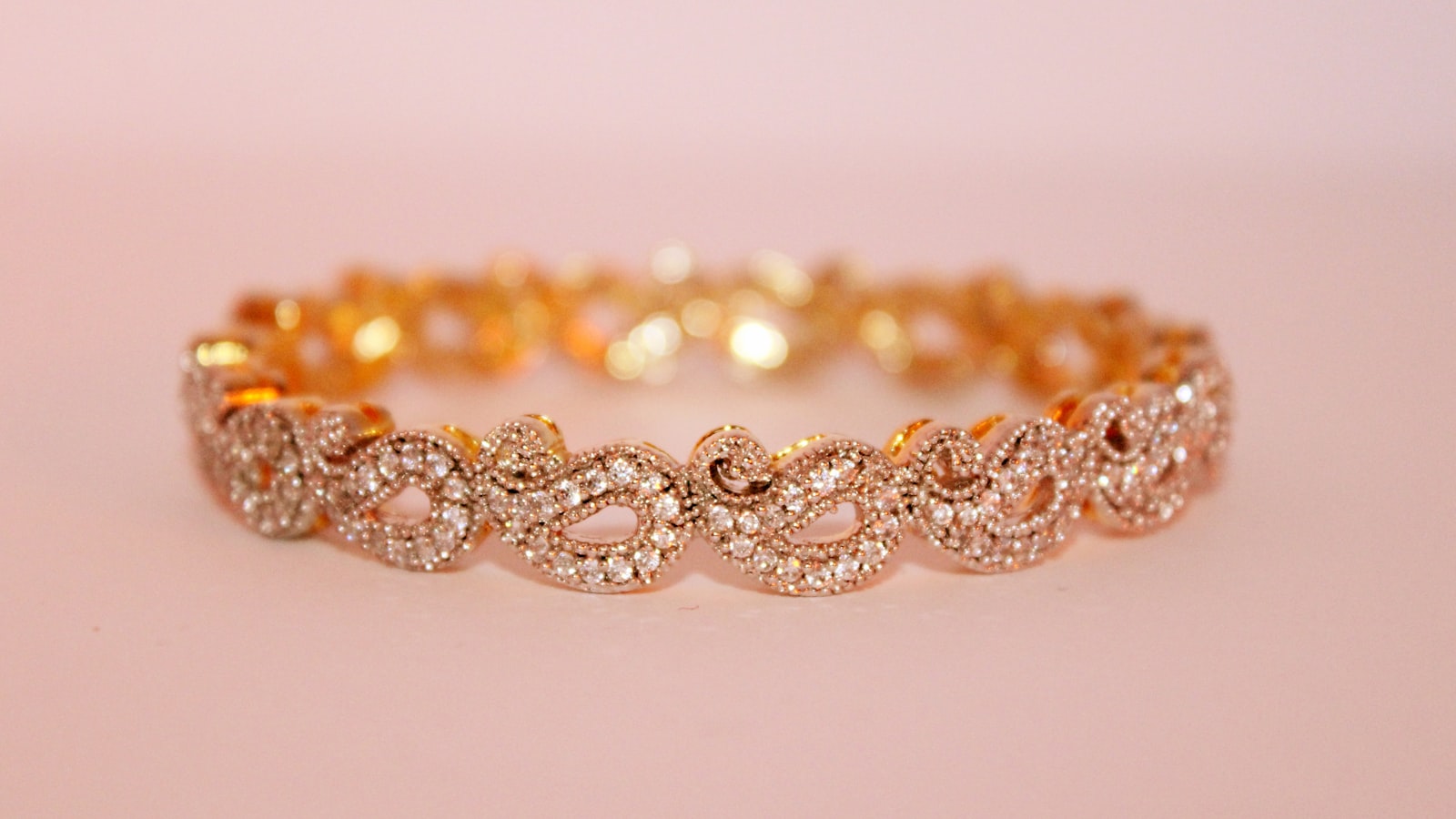
Stacking is the hottest wrist play of recent years: thin on thin, bangle with chain, metal mixed with beads. Done wrong it is a jangle of clashing widths, scraping materials and annoying noise. This article covers width ratio, material compatibility and wear-noise control, so you stack tiers not clutter. The wrist moves and knocks, so stacking's success is seven parts rhythm, three parts restraint.
Total wrist decoration must restrain: most wear 2 to 4 pieces per wrist comfortably, more looks heavy and knocks. Below, three axes, width, material, sound. Remember: stacking's beauty is in tiers, and tiers need rhythm, not quantity. More is not better; that is the wrist's difference from neck and chest.
The Width-Ratio Rule
Stacking's first rule is rhythm in thickness. The steadiest combo graduates: a 1 to 2 mm thin base, a 3 to 4 mm mid, a 6 mm plus bangle to close, a visual stair. Avoid two same-thick, say two 5 mm, side by side; they fight and widen the wrist. Keep the width gap at least 2 mm for tiers.
A bangle carries strong presence; with a chain the chain must be thin, 3 mm or under, or they clash. A slim wrist, under 14 cm, keeps total width under 12 mm; a thick wrist can reach 18 mm. Right ratio and even three pieces read clean. Width is the scale of stacking; no stair, no melody.
- Graduate thickness: 1 to 2 mm thin plus 3 to 4 mm mid plus 6 mm bangle
- Avoid same-thick side by side
- Slim wrist total width under 12 mm
Material Mix Compatibility
One colour family is safest: all gold, 14K or 18K same tone, all silver, gold plus rose as neighbours. Silver against yellow gold needs a design bridge, a two-tone link, or it looks like two crowds. Unified material colour is the floor of no-mess stacking.
Mind the hardness gap: platinum, Mohs 4 to 4.5, worn with silver, 2.5 to 3, and the silver gets scratched by platinum; hard gold against solid gold, the harder scrapes the softer. Keep close-hardness together, or separate a wide gap, a spacer bead or leather, to cut direct friction. Compatibility is the hidden cost of long wear.
Wear and Noise Control
Metal bangles knocking make scratches and a clink. Three controls: one, keep pieces under three and fit snug, too loose knocks; two, use silicone spacers or braid segments between hard hits; three, choose matte or smooth-inner styles, mirror finishes scratch most.
Remove bangle-type hard pieces before sleep, typing, holding a baby, to cut wear sharply. Sound-sensitive wearers avoid several hollow bangles; thin walls clink sharper. Noise is not minor; it decides whether you can wear them daily without annoyance. Many quit stacking because removing at night is a chore, so control the count.
Beads and Braid in the Mix
Natural stone beads, agate, lapis, pearl, and braid soften metal's cold, the breathing space of stacking. Pearl chains are delicate; do not rub directly against a metal bangle, separate with braid; lapis and turquoise fear sweat and acid, not for sport. Beads are the buffer and the colour layer.
A bead chain sits 1 to 2 cm shorter than the metal, concentrated above the wrist bone. Beads spread weight and make no noise, the quiet layer of stacking. One plain bead chain softens two metal chains; it is the lubricant. Without beads, stacking reads cold and flat.
Wrist Size and Count
Measure wrist: soft tape at the thinnest point over the bone; under 14 cm slim, 14 to 16 medium, over 16 thick. Slim wears 2 pieces, total width under 10 mm; medium 2 to 3; thick 3 to 4 for weight. The wrist is the canvas; small canvas, few things.
Bangle inner diameter takes wrist plus 1.5 to 2 cm for easy on-off, round; an oval imperial bangle can be 0.5 cm smaller. An open bangle adjusts but deforms; a closed bangle is crisp but must pass the palm bone. Try so the palm bone passes and the wrist does not wobble; that is the right size. Wrong size, and even beautiful it will not fit or sit.
Rhythm and Negative Space
Stacking rhythm comes from density: two pieces concentrated above the wrist bone, a gap, then one more up, livelier than even spread. Negative space and concentration are both design language. Or split wrists: left wrist main chain, right main bangle, avoid one wrist overloaded.
In colour keep under two metal tones, add one colour bead as accent. The root of messy rhythm is wanting to wear everything; subtract for tiers. Stacking is editing; what you delete matters more than what you add.
Price and Configuration
2026 reference: 925 silver thin chain 50 to 200 RMB, about 7 to 28 dollars; 18K thin chain 600 to 1,500 RMB, roughly 85 to 210 dollars; a gold bangle, solid ancient-method, by gram at 560 to 740 RMB per gram, so 15,000 to 40,000 RMB, some 2,110 to 5,630 dollars; jade bangle 2,000 to hundreds of thousands. Stacking need not be all dear; mixing dear and cheap is its fun.
Suggest one main bangle plus one or two thin chains plus one bead strand; total 2,000 to 8,000 RMB builds tiers. Sensitive skin trusts silver, gold, titanium, avoid alloy nickel. The main bangle sets tone; thin chains and beads fill. Stacking's charm is exactly one dear main, the rest accents, yet rich overall.
Bangle size by palm method: hand flat, soft tape around the widest palm, the circumference maps the code. Round bangle by this code; imperial bangle down 1 to 2 codes. Online bangle must measure palm first; the code differs from wrist, wrist alone buys wrong.
Jade and gold bangles together: jade is hard but brittle, not against a metal bangle directly, a thin braid between as buffer. Jade fears drops; remove on a soft pad, a fall cracks it. Gold bends, remove for gym. The two bangles' care logic differs entirely; do not lump them.
Bead-string life: elastic cord ages 6 to 12 months, replace on schedule against break; non-elastic braid 1 to 2 years. Bath and sweat age cord faster; remove before sport. A few-tens string job saves a thousands bead strand; do not skip that small cost.
Stacking clean order: remove hard pieces first, wipe alone, then beads and soft chains. Silver bangle with silver cloth, gold chain with soft cloth and neutral detergent, rinse and dry. Braid bead chains not soakable, surface wipe only. Dry fully before storage; trapped damp is the oxidiser.
Stacking visual weight: wrist decor should not fight necklace and earrings at once. If earrings are big hoops, the wrist is held back to thin chains; if the necklace is the long focus, the wrist takes a plain bangle. The whole set needs a lead and a support; even good stacking leaves negative space.
Metal allergy shows more in stacking: many pieces press the wrist, nickel alloy contact is large, sensitive skin rashes. Take 925, 18K, titanium, avoid alloy nickel. More pieces demands cleaner material or beauty comes with redness.
Bangle on-off with hand cream and a plastic bag: bag the hand thin then wear, less friction for bangle and wrist. This works for imperial and push bangles, especially wide palms.
Stacking's beauty is in tiers; tiers need rhythm, not quantity.
Practical checklist
- Graduate thickness; adjacent pieces differ by 2 mm plus for tiers
- One colour family safest; gold-silver clash needs a two-tone link
- Separate wide-hardness materials with a spacer bead or braid against scrape
- Keep 2 to 4 pieces; remove hard hits before sleep and typing
- Do not rub pearl or bead strands directly against a metal bangle
The essence of wrist stacking is rhythm not pile. Hold three lines, graduate width, adjacent gap 2 mm plus, one colour or neighbour tone, 2 to 4 pieces snug, and you build tiers not noise. Wide-hardness metals need a spacer or braid so silver is not scraped by gold and hard gold spares solid; pearl and jade, the delicate layers, take braid as buffer. Slim restrains, thick carries; bangle inner diameter takes wrist plus 1.5 to 2 cm. On budget, not all dear, one main bangle plus thin chain plus bead strand at 2,000 to 8,000 RMB does it. Last line: the wrist moves and knocks, so remove hard hits before sleep, protecting both jewellery and sleep, and stacking stays good long. The wrist's tiers are restrained, not piled.
Frequently asked
My stacked bangles keep clinking; what do I do?
Can I wear a silver and a gold bangle together?
How many pieces suit a slim wrist?
Keep reading
More Jewellery
Allocation and Order for an Engagement Ring: Loose Stone, Setting, Brand Premium and Custom Lead Time
A workable plan with a 5-3-2 budget split, loose-stone priority and custom lead-time pitfalls.
Earrings and Face Shape: Studs, Threads, Hoops and Tassels, Plus Weight and Back Material
By face shape we split the four earring types, stud, thread, hoop, tassel, and cover weight limits and hypoallergenic back points.
Necklace Length and Neckline: How 40, 45, 60 and 80 cm Meet Round, V and Turtleneck
Using five lengths, 40, 45, 50, 60, 80 cm, against round, V, turtleneck and more, a formula you can follow directly.